car accidents common las vegas thestripesblog? Causes, Risks, and Safety Tips
Las Vegas isn’t just a tourist destination — it’s one of the busiest, most collision-prone cities in the western United States. Between the 24-hour traffic on the Strip, thousands of out-of-town drivers unfamiliar with local roads, and a nightlife culture that doesn’t slow down after midnight, car accidents are common in Las Vegas in ways that don’t show up in most other cities of comparable size. This guide breaks down exactly why car accidents common las vegas thestripesblog, where they happen most, and what you can actually do to avoid becoming part of the statistic.
How Common Are Car Accidents in Las Vegas, Really?
The numbers tell the story better than any headline can. Las Vegas averages roughly 20,000 reported crashes a year — that works out to about 55–56 accidents every single day across the valley. When you zoom out to the greater Las Vegas Valley (including Henderson and North Las Vegas), total annual crash counts climb well past 30,000.
To put that in perspective:
| Metric | Approximate Figure |
|---|---|
| Annual crashes in Las Vegas | ~20,000 |
| Daily average crashes | ~55–56 |
| Share of all Nevada crashes | ~43% |
| Share of fatal crashes tied to intoxicated driving | ~43% |
| Share of fatal crashes occurring at night | ~55% |
| Share of fatal crashes from speeding | ~32% |
| Share of fatal crashes from distracted driving | ~3% |
That last number surprises a lot of people. In most U.S. cities, distracted driving is one of the top three causes of fatal crashes. In Las Vegas, it’s unusually low — but that doesn’t mean the roads are safer. It means other risk factors, like impaired and nighttime driving, are doing far more damage here than almost anywhere else in the country.
Why Are Car Accidents So Common in Las Vegas?
There isn’t one single reason car accidents are common in Las Vegas — it’s a combination of geography, culture, and traffic patterns that don’t exist together anywhere else.
1. The City Never Really Sleeps
Most cities have a clear rush hour and a quiet overnight lull. Las Vegas doesn’t work that way. Casinos, bars, and entertainment venues run 24 hours a day, which means traffic volume stays elevated well past midnight. Add alcohol into that mix and you get a dangerous combination: more cars on the road at the exact hours when driver impairment peaks. team saxton thestripesblog
2. Tourists Driving Unfamiliar Roads
Millions of visitors rent cars every year and attempt to navigate a city they’ve never driven in — often while distracted by GPS directions, casino signage, or simply trying to find their hotel’s parking garage. Rental car crash rates in Las Vegas are notably higher than local driver crash rates, and tourists are frequently involved in sudden lane changes, missed exits, and last-second stops.
3. The Strip Itself Is a Traffic Trap
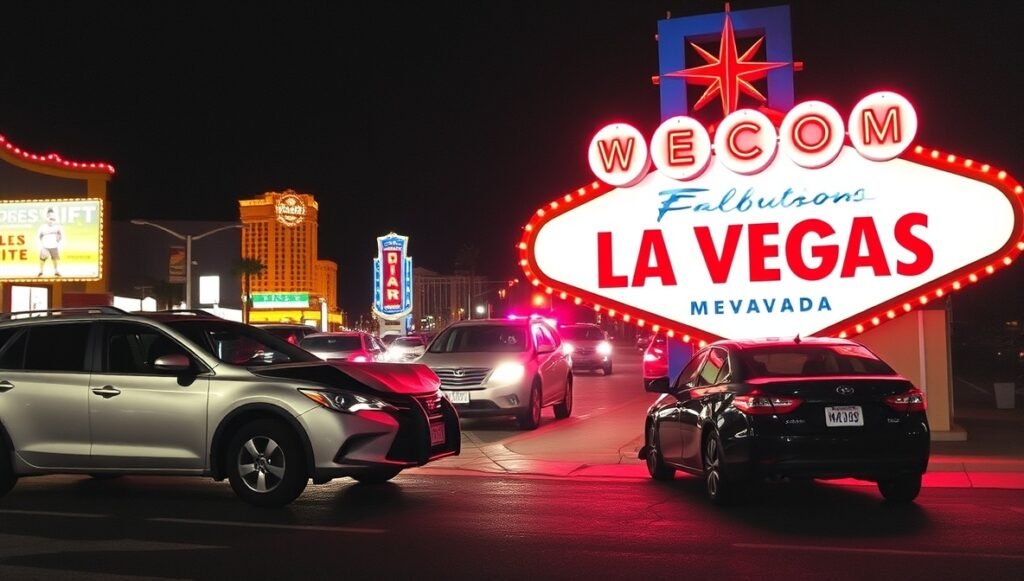
Las Vegas Boulevard is a mix of pedestrians crossing mid-block, rideshare vehicles stopping in travel lanes to pick up passengers, tour buses, and stop-and-go congestion — all packed into a corridor that was never designed to handle this volume of foot and vehicle traffic simultaneously. It’s one of the primary reasons car accidents are common in Las Vegas near tourist corridors specifically, not just on freeways.
4. Alcohol and Nightlife Culture
Nevada’s DUI numbers are stark. Roughly 43% of Nevada’s fatal crashes involve a drunk driver, well above the national average of around 32%. DUI checkpoints cluster around the Strip, Fremont Street, and resort corridors for a reason — that’s where late-night impaired driving incidents spike hardest.
5. Speed and Wide, Straight Roads
Many of Las Vegas’s arterial roads are wide, straight, and built for high-speed traffic flow. That design encourages drivers to exceed posted limits, especially late at night when roads are emptier. Speeding remains one of the top contributors to fatal crashes across the valley.
6. Failure to Yield and Lane Violations
According to LVMPD crash-cause breakdowns, failure to yield the right of way is the single leading cause of fatal accidents in Las Vegas, responsible for roughly a third of them. Failure to stay in a lane and pedestrian error round out the next biggest categories.
Where Car Accidents Happen Most Often in Las Vegas
Not all roads carry equal risk. Certain corridors consistently generate higher crash volumes due to congestion, speed differentials, and pedestrian activity.
High-risk corridors include:
- Las Vegas Boulevard (the Strip) — pedestrian crossings, rideshare stops, tourist congestion
- Tropicana Avenue — heavy merging near I-15 and resort entrances
- Flamingo Road — high-speed arterial traffic mixed with casino access points
- Interstate 15 through the resort corridor — stop-and-go congestion during peak hours
- US-95 near downtown — high-speed merging and lane changes
- Fremont Street area — nighttime pedestrian and DUI-related incidents
These corridors share common traits: heavy merging, pedestrian crossings, unfamiliar drivers, and high nighttime activity. It’s not a coincidence that car accidents are common in Las Vegas specifically along these stretches rather than being spread evenly across the city.
When Are Car Accidents Most Likely to Happen?
Timing matters as much as location. Crash data consistently points to a few high-risk windows:
- Nighttime hours (10 PM–4 AM): Over half of fatal crashes occur during this window, largely tied to impaired driving.
- Rush hours (7–9 AM and 4–6 PM): Higher vehicle density increases the odds of rear-end and lane-change collisions.
- Weekends and holidays: More tourists, more nightlife activity, and more alcohol consumption combine to spike accident rates.
- Major event weekends: Formula 1 race week, New Year’s Eve, EDC, and large conventions bring in extra traffic volume the road network wasn’t built to absorb, and crash counts climb accordingly during these stretches.
Most Common Types of Car Accidents in Las Vegas

Beyond causes and locations, it helps to understand what kinds of collisions actually happen most often:
- Rear-end collisions — extremely common on congested corridors with frequent stop-and-go traffic and sudden braking.
- Pedestrian-involved crashes — Las Vegas sees a disproportionately high rate of pedestrian incidents compared to similarly sized U.S. cities, especially around the Strip and Fremont Street.
- DUI-related crashes — concentrated late at night near entertainment districts.
- Rideshare-related incidents — Uber and Lyft vehicles making sudden stops in active traffic lanes to pick up or drop off passengers.
- Rental car accidents — tourists unfamiliar with local roads, signage, and traffic patterns.
- Motorcycle accidents — often more severe due to lane-splitting and reduced visibility at night.
Tourists vs. Locals: Different Risks, Different Causes
It’s worth separating these two groups because their risk profiles genuinely differ.
Tourists tend to be involved in accidents because of:
- Unfamiliarity with roads, exits, and signage
- Distraction from GPS navigation or sightseeing
- Rental car unfamiliarity (different vehicle handling, blind spots)
- Walking and driving after drinking
Locals tend to be involved in accidents because of:
- Routine speeding on familiar roads
- Fatigue from graveyard-shift work schedules common in the hospitality industry
- Overconfidence navigating high-traffic corridors during rush hour
- Late-night driving near entertainment districts
Understanding which category you fall into can actually change how you should approach driving in the city — a tourist should prioritize slowing down and double-checking navigation before making turns, while a local should be more mindful of fatigue and complacency on familiar routes.
How to Avoid Becoming Part of the Statistics
Given how common car accidents are in Las Vegas, a few practical habits meaningfully reduce your risk:
- Avoid driving on the Strip during peak nightlife hours if you don’t need to — walk, use rideshare, or take the monorail instead.
- Never assume pedestrians will stay in crosswalks — jaywalking near the Strip and Fremont Street is common.
- Add extra following distance on high-speed arterials like Flamingo and Tropicana, where rear-end collisions are frequent.
- Plan routes in advance if you’re a tourist, rather than relying on last-second GPS turns.
- Avoid driving between 10 PM and 4 AM if possible, especially on weekends, when impaired-driving risk peaks.
- Watch for rideshare vehicles stopping abruptly in travel lanes near hotels and casinos.
- Check event calendars before major weekends — F1, EDC, and conventions all bring traffic surges.
What to Do If You’re Involved in an Accident
If you do end up in one of the thousands of car accidents that happen in Las Vegas each year, a few steps protect you legally and financially:
- Move to safety if possible and check for injuries.
- Call 911 — Nevada law requires reporting accidents involving injury, death, or significant property damage.
- Document the scene with photos: vehicle positions, damage, road conditions, and any relevant signage.
- Exchange information with the other driver(s) and get contact details from any witnesses.
- Avoid discussing fault at the scene — let the official report and insurance process determine liability.
- Seek medical evaluation even for minor injuries, since some symptoms don’t appear immediately.
- Notify your insurance company promptly and keep records of all related expenses.
Frequently Asked Questions
Why are car accidents so common in Las Vegas compared to other cities?
A mix of 24-hour nightlife, heavy tourist traffic, unfamiliar drivers, and elevated DUI rates makes car accidents more common in Las Vegas than in most cities of similar size.
What time of day do most car accidents happen in Las Vegas?
Most fatal crashes occur at night, particularly between 10 PM and 4 AM, when impaired and fatigued driving rates are highest.
What is the leading cause of fatal car accidents in Las Vegas?
Failure to yield the right of way is the leading cause, followed closely by pedestrian error and failure to stay within a lane.
Are tourists more likely to be in car accidents in Las Vegas?
Yes. Rental car crash rates are notably higher among tourists due to unfamiliar roads, signage, and navigation distractions.
Which roads in Las Vegas have the highest accident rates?
Las Vegas Boulevard (the Strip), Tropicana Avenue, Flamingo Road, and the I-15/US-95 interchange consistently report the highest crash volumes.
Is distracted driving a major cause of accidents in Las Vegas?
Surprisingly, no — distracted driving accounts for only about 3% of fatal crashes in Las Vegas, far below the national average, with impaired and nighttime driving posing much bigger risks instead.
Do car accidents increase during major Las Vegas events?
Yes. Traffic and crash rates rise noticeably during high-attendance events like Formula 1 race week, EDC, New Year’s Eve, and major conventions.